
Back in the early 1980s, Toyota linked up with Winnebago to give its Hilux a bit more passenger capacity to tackle the likes of the Ford Bronco and Chevrolet K5 Blazer. That machine was the Trekker, of which around 1,200 to 1,500 units were built for the 1981 through 1983 model years. After that, Toyota opted to build its own Trekker off of the Hilux to sell to the U.S. market for the 1984 model year. With help from ad agency Saatchi & Saatchi, this new SUV gained a suitable name: 4Runner.
Over 40 years later, the once-kit-bashed 4Runner is one of the most-popular off-roading machines around. After some 15 years on the trail, the fifth-generation 4Runner — the longest-running generation to date — was finally given its gold watch, as an all-new model arrived for the 2025 model year.
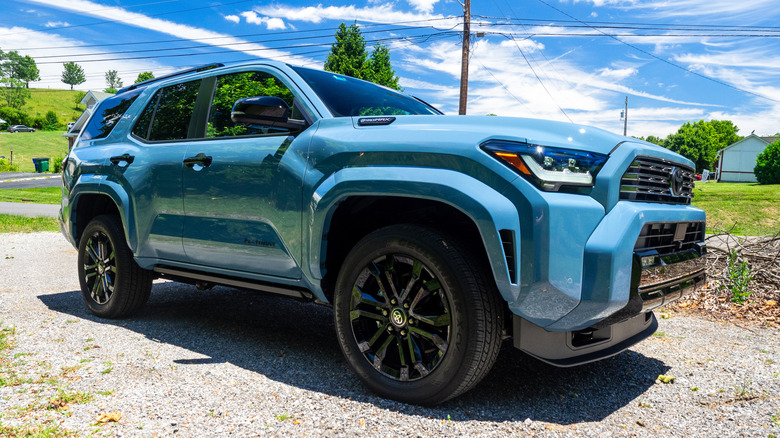
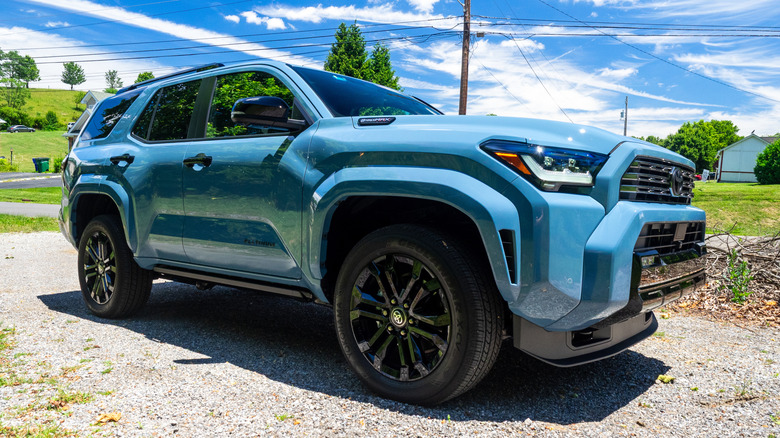
Does this new Toyota prove that age ain’t nothing but a number, though? And will a bit of luxury take away from the overall experience that is the 4Runner? To help me answer this question, the automaker sent over an example in its most luxurious guise, a 2026 Toyota 4Runner Platinum all dressed in Heritage Blue, to spend a week with me within the Blue Ridge Mountains of Southwestern Virginia.
So many choices… perhaps too many
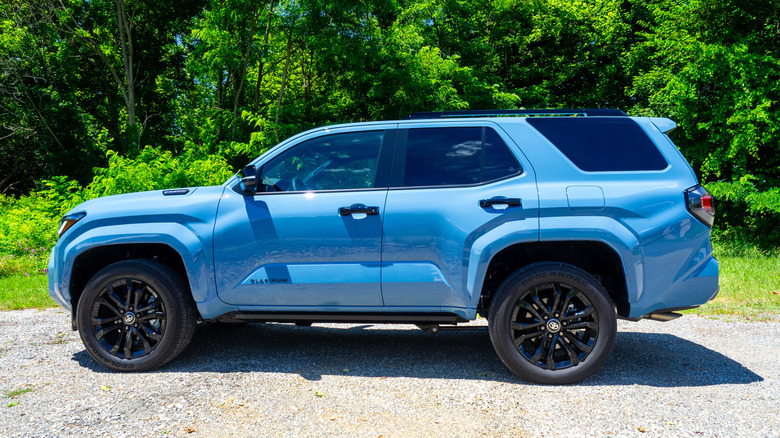
The 1984 4Runner offered only two trims: the base model (which didn’t have a rear bench seat) and the SR5 (which did). Pricing started at above $10,000 to nearly $12,000 (above $32,000 to nearly $39,000 in 2026) before options. In 2026, you can have your 4Runner in one of 12 trim levels, all well above what the 1984 duo sold for when new (even after adjusting for inflation). Here’s what it’ll set you back before the $1,495 destination charge:
- SR5: $42,070
- TRD Sport: $48,550
- TRD Off-Road: $50,490
- TRD Off-Road i-FORCE MAX: $53,290
- TRD Sport Premium: $53,910
- TRD Off-Road Premium: $56,270
- Limited: $56,700
- TRD Off-Road Premium i-FORCE MAX: $59,070
- Limited i-FORCE MAX: $61,500
- Platinum: $64,160, $66,860 total sticker as-tested
- Trailhunter: $68,200
- TRD Pro: $68,400
You’re certainly spoiled for choice when it comes to the 2026 4Runner, though there are a few other competitors capable of matching up to the Toyota when it comes to off-road performance. The Honda Passport TrailSport and TrailSport Elite ($48,450 and $52,450, respectively) can go nearly anywhere the 4Runner can, even if it’s a unibody machine.
On the body-on-frame category, the Ford Bronco ($40,495 – $79,995 starting MSRP) and Jeep Grand Cherokee/Grand Cherokee L ($38,415 – $60,195/$40,415 – $62,195) will be waiting on the rocks for the iconic off-roader.
No Prius, but it might be the best at MAX-imizing its fuel tank
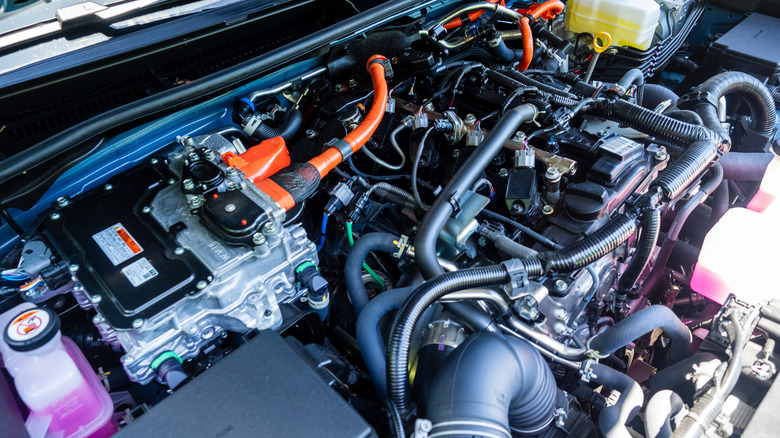
Depending on trim, the 2026 4Runner comes with one of two powertrain options. Non-i-FORCE MAX models — basically all aside from the Platinum, Trailhunter, and TRD Pro trims — use a 2.4-liter turbocharged four-cylinder with an eight-speed automatic. Output comes to 278 horsepower and 317 lb-ft of torque, which hits the trail either through the rear or all corners, the latter courtesy of optional part-time four-wheel drive.
The i-FORCE MAX models add an electric motor into the mix, with part-time or full-time four-wheel drive (depending on trim level). The same eight-speed automatic is in play here, though now it has a combined 326 horsepower and 465 lb-ft of torque to manage.
 Cameron Aubernon/SlashGear
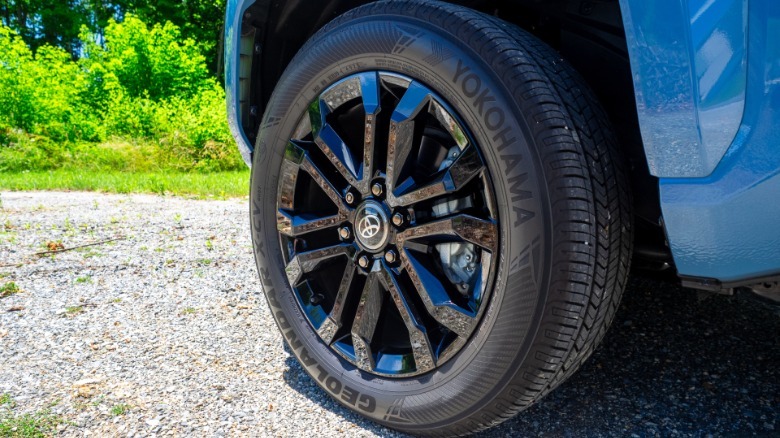
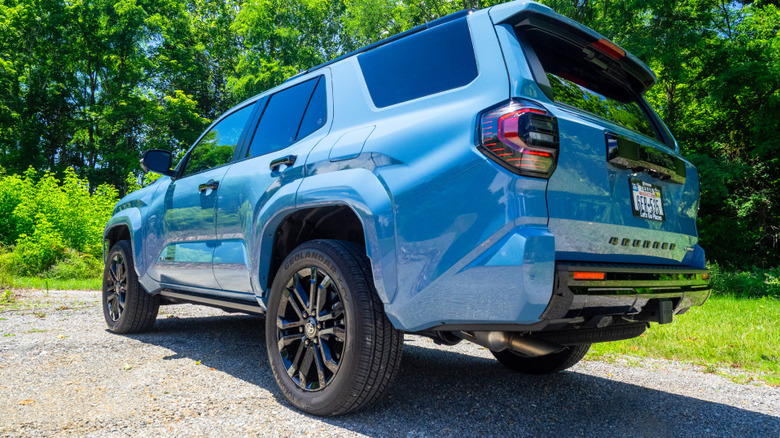
A set of 17-inch wheels come on the base SR5, while the rest work with either 18- or — as seen above with the Platinum trim — 20-inch units. Trim level also determines what sort of tires you’ll get, too. The Trailhunter, for example, has special 18-inch bronze alloys mounted in 33-inch Toyo all-terrain tires. On the other hand, my Platinum, preferring a more pastoral life, received a set of Yokohama Geolandar X-CVs for a quieter ride.
As far as fuel economy, your mileage may vary on (once again) trim level, from 20 mpg city/26 mpg highway for the SR5, to 23 city/24 highway for the i-FORCE MAX-equipped trims like my Platinum. These hybrid engines, as I’ve experienced a few times before, emphasize power more than fuel savings. With my combined in-town driving plus a few excursions elsewhere, I managed a final combined 19.2 mpg, which isn’t all that great in real life compared to what’s on paper. The i-FORCE MAX engine prefers premium gas, too, while the standard turbo-fours can use regular fuel.
Lots of chunk to go with the hunk o’ burnin’ tech
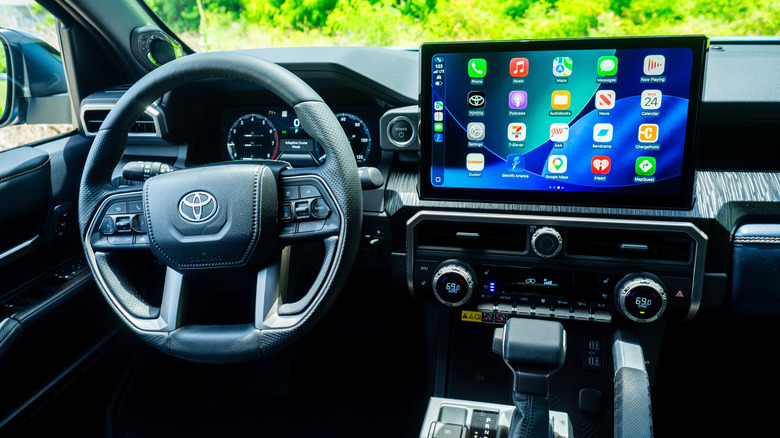
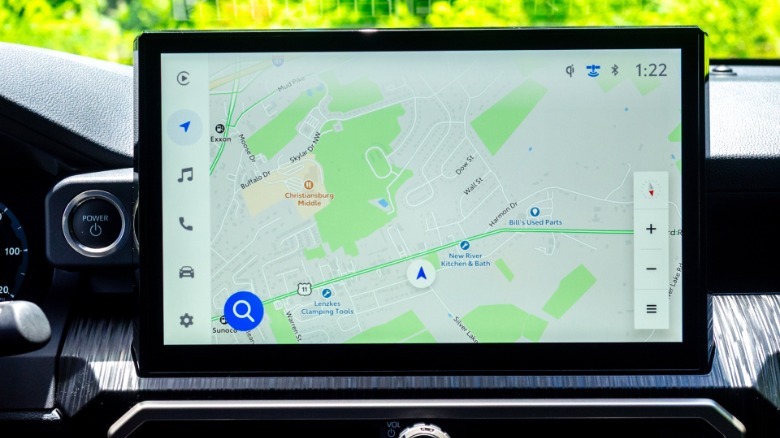
Compared to the previous generation, the sixth-generation 4Runner gets a big tech boost. In 2026, the base SR5 comes with a 7-inch instrument display cluster and an 8-inch center console touchscreen, while the other trims gain a 12.3-inch digital instrument cluster; the TRD Sport Premium through TRD Pro trims get a big 14-inch touchscreen. That touchscreen handles wireless Apple CarPlay and Android Auto, plus Toyota’s own Google-based navigation system, satellite radio, Bluetooth, Wi-Fi hot spot, and — for off-road oriented trims — a multi-terrain monitoring system (aka surround cameras) so you can see how to best navigate the roughest of trails.
 Cameron Aubernon/SlashGear
Thankfully, not everything is locked away behind the touchscreen (or Toyota’s collection of subscription services, like the aforementioned OEM navigation, for that matter). Audio volume can be tuned via the big, chunky knob above the HVAC system, itself controlled via actual knobs and switches. Sound comes from either the standard eight-speaker unit or — on higher trims like my Platinum — a 14-speaker JBL system with a removable dash-top speaker that pops out for campsite entertainment.
Amid the chonkyness of everything, the 2026 4Runner has a good list of standard safety features that starts with Toyota Safety Sense 3.0. The list also includes blind-spot monitoring, lane-centering assist, lane-keeping assist, automatic high beams, and adaptive cruise control. Available safety features include a rear-camera mirror (in case you stack the rear cargo space full of gear), a head-up display, surround-view cameras for guiding the off-roader into and out of trouble (and parking spaces), and front and rear parking sensors.
This interior contains multitudes
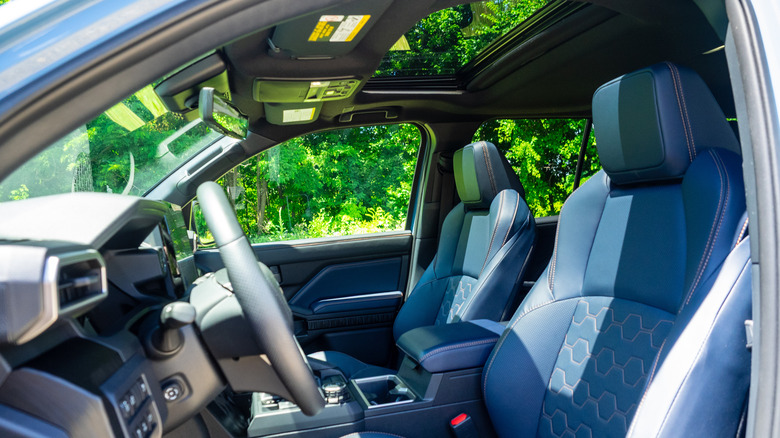
In the original 4Runner, the second row was optional; the 2026 4Runner can be had with a third row, now, though only on the SR5 (a $770 option) or Limited ($1,330) trims. That option adds a 50/50-split third row to increase seating from five to seven. Seating surfaces range from the SR5’s cloth and the TRD Sport Premium’s synthetic leather, to the Limited’s genuine leather and my Platinum’s premium hide. The TRD Sport adds heated front seats; the TRD Sport Premium gives the front seats eight ways of power adjustments and a heated steering wheel; and the Limited contributes ventilation to the front seats and dual-zone climate controls. Finally, the Platinum heats up the rear seats for the three second row occupants.
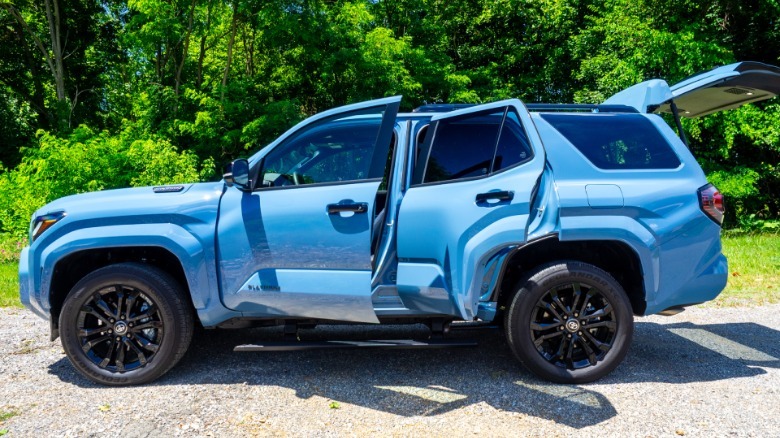
Speaking of the rear, I found accessing the back about as challenging as doing the same with my 1997 Toyota RAV4 five-door, as the rear door openings are a bit small. Legroom is about as small at 34.8 inches (the third row, by the by, offers 31.8 inches of space) while front occupants enjoy 41.8 inches. At least the power running boards on the Platinum (also available on the Limited; the Limited and TRD Off-Road also offer fixed boards) made it easier to get in and out.
 Cameron Aubernon/SlashGear
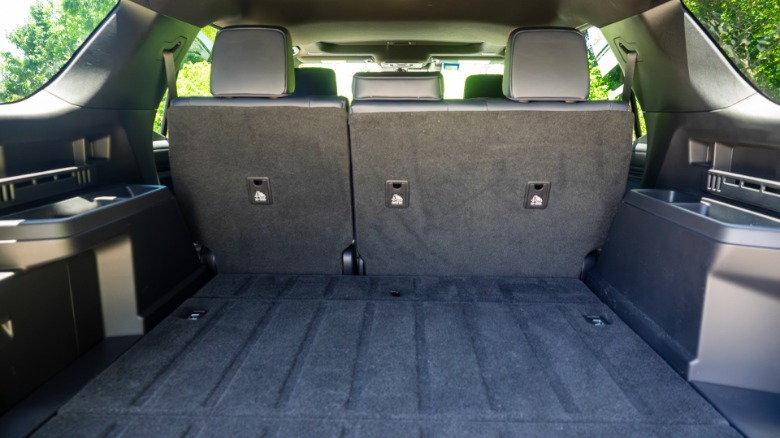
Behind the 60/40-split second row, the 2026 4Runner may have less cargo space than you expected, depending on whether or not you opted for the i-FORCE MAX trims or a third row. Non-hybrid models without that third row offer 48.4 cubic feet with the second row seat backs upright, 90.2 cubic feet when folded. Hybrid models have 42.6 and 82.6 cubes respectively due to the higher loading floor, since the battery pack is mounted above the rear axle. The third row reduces space to 12.1 cubic feet with all seat backs up, increasing to 44.8 cubic feet with the third row down, and 84.1 cubes with the second row down, too.
The 4Runner still has the classic power rear glass for loading things like canoes and surfboards without opening the entire hatch. It can also tow up to 6,000 pounds when properly equipped, while the roof can support up to 165 pounds of gear during the drive to the campsite, and up to 770 pounds for overnight camping in the rooftop tent of your choice.
Life with an icon, over four decades later
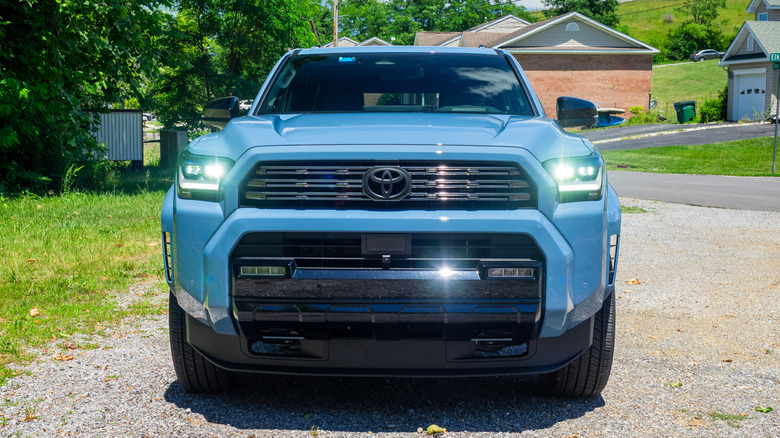
Toyota’s wide array of 4Runner trims leave some more off-road appropriate than others. Despite being capable of tackling rough trails like the rest of its siblings, this Platinum trim’s Yokohamas were made for quiet drives around town and over the interstates, not scaling ditches by their sidewalls. So, I instead did what I normally would: a mixture of short trips that eat away at the fuel economy, and highway drives to let that turbocharged four-cylinder whistle quietly.
I wasn’t thrilled that the rear cargo area had a hump to make loading heavy boxes more challenging, but at least they did clear the space; bigger boxes may have to be loaded differently if you choose the hybrid models.
 Cameron Aubernon/SlashGear
As far as driving, I could really feel the 4Runner’s heft while turning through corners or even just in the parking lot; it’s still a body-on-frame truck experience, after all. The high ground clearance did come in handy when I needed to do some unscheduled curb climbing in order to get out of a very tight spot, though. On the interstate the bruiser was quite the cruiser, and pretty comfortable while doing it, too, no matter the drive mode I chose.
I opted to keep it in Sport mode through the road winding down from the overlook to the town of Pulaski below to see how well it could come down the mountain on pavement, which it did so with no trouble. There are more agile rides out there, but the 4Runner isn’t too bad around the bends; just don’t think it can chase the Tail of the Dragon, though.
2026 Toyota 4Runner verdict
Toyota saw a good thing in its partnership with Winnebago forty years ago, and kept it going on its own with the first 4Runners. Through the decades since, the midsize off-road SUV staked its claim on the trail next to its legendary brother, the Land Cruiser. Throw in a very healthy aftermarket to take the icon to the next level (or all of them), plus Toyota’s famed emphasis on durability and reliability, and it’s no wonder why the 4Runner enjoys a popularity among drivers to this day.
Popularity doesn’t mean perfection, however. The i-FORCE MAX powertrain definitely has the power, but the selling point of any mainstream hybrid is economy. With fuel prices bouncing off the walls, not to mention the fact that what’s on paper didn’t match up to what I found in reality, the 4Runner’s engine upgrade option doesn’t live up to the hybrid promise.
Speaking of promises, an unspoken one appears to have been broken with this generation of the 4Runner: that of an affordable, off-road capable SUV. Should such a machine have aspirations of luxury if it means not being able to really take it to the limit on the trail? Yes, you could swap out the Platinum trim’s rims and tires, and add a few things here and there to fix some of the other road-centric issues, but that’s only adding more money to an already expensive proposition.
Toyota wisely left the luxury angle in the hands of the Lexus LX; the 4Runner should be allowed to return to its roots in the same manner. There are off-roadable SUVs with more room for people and cargo in the back, and there are off-roadable SUVs harkening back to the past, but none have quite the character and breadth of capability of the 4Runner.

Stephan is the sports journalist for the Maple Grove Report.