Vail Communities’ ‘clubhouse’ program saved by angel donor


Earlier this year, Corey Sauer read an article in the Pioneer Press explaining that without about half a million dollars, state funding cuts would cause the closure by June 30 of two “clubhouse” programs for people with severe and persistent mental illness.

Sauer, a retired cartoonist who serves on the board of his family’s foundation, decided that he had the means and the motivation to keep the centers open at least a little bit longer.

The clubhouses, operated by Vail Communities, serve as drop-in sites where people with mental illness can socialize, take part in structured activities and find meaningful employment. There’s one in St. Paul’s Rondo neighborhood, one in Minneapolis’ Uptown, and one in Hopkins. (The Hopkins location, which receives funding from Hennepin County, was not at risk of closure.) 

Members’ concerns about losing their clubhouses held special resonance for Sauer. “I am a life-long sufferer from depression and anxiety,” he said. “I get it. I understand the need for community and support.”  So he decided to make a $500,000 donation from his personal accounts. 

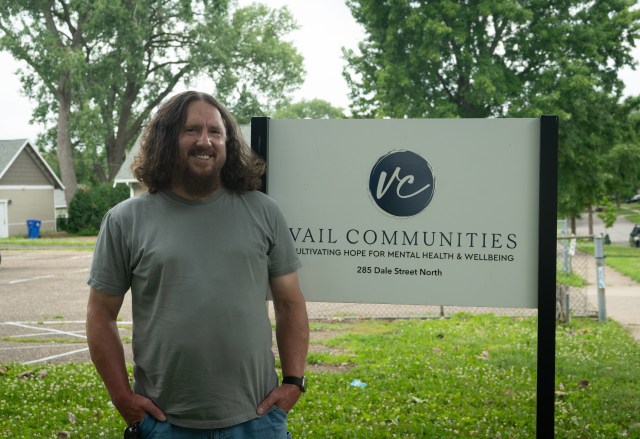
A man with shaggy brown hair stands next to a sign that says Vail Communities.
Corey Sauer donated $500,000 to keep Vail Communities clubhouses operating until they can find more sustainable sources of funding. Credit: MinnPost photo by Taylor Canas

The same week that Sauer’s donation was finalized, Vail learned they would also receive six months of bridge funding from the Minnesota Department of Human Services, said Ashley Trepp, Vail Communities’ executive director. The state money is aimed at helping the organization operate through the end of 2026 while DHS makes changes to its grant funding.  

Trepp explained that Sauer’s donation will extend Vail’s timeline further. “It will allow us to have a longer runway so that we won’t be fully dependent on DHS funding and we will have time to develop a sustainable, diversified funding system,” she said. 

A place where everyone gets it

The email announcing Sauer’s gift felt like a bolt out of the blue. “We thought it was spam at first,” Trepp said. “It was one of these miracles that still almost feels too good to be true.”

Following his donation, Sauer visited the clubhouses for the first time. He met with members and heard about how the program has impacted their lives. “People told me that Vail was a place where they didn’t have to explain themselves, because everyone got it,” he said. “It was a community.”

April Cooley is a member of Vail’s St. Paul clubhouse (known by members and staff as RamCo). Before joining, she had lived in an assisted-living program and spent her days working in a supported workshop. Since joining, Cooley said she’s moved into her own apartment and gone back to school.  She now runs the clubhouse’s front desk and coordinates member outreach. 

“I attribute a lot of my success to Vail RamCo,” Cooley said. “They’ve supported me through everything that I’ve done.” 

Cooley met Sauer when he visited the program and she liked that he talked about his own mental health struggles. “He’s just like all of us,” she said.

Ongoing financial uncertainty

In recent years, Vail’s clubhouses have survived a number of dips and turns. As early as 2015, state lawmakers crafted legislation compelling DHS to develop a Medicaid benefit that covers clubhouse services, but the effort stalled. In 2024, new legislation was introduced to push the effort forward, including calling for a study that looked into clubhouse programs’ effectiveness.

In the meantime, the Minneapolis and St. Paul clubhouses were funded by one-year state contracts. Trepp, who stepped into the executive director role in December 2025, said she’s been meeting regularly with DHS to stay clear on their funding status.

By the end of March, Trepp said that she and her colleagues were informed that the state would not be able to renew their contract because of increased federal scrutiny of “sole-source funding,” or funding offered without a competitive bidding process. Trepp was frustrated by the decision, she said, because Vail Communities is “the only accredited provider of clubhouse services in the state. That’s how we meet the criteria for a sole-source contract.” 

Trepp expressed understanding of the department’s caution and gratitude for its support, but said, “When  you overcorrect for fraud, people get harmed.”

Moving forward, Vail Communities hopes to borrow a page from its Hopkins Clubhouse, whose partnership with Hennepin County has provided a steady funding source and added stability. Vail leaders have spoken with Ramsey County officials about setting up a similar partnership in St. Paul, Trepp said. But like DHS, the county said it cannot offer sole-source funding. 

Still, the county is soliciting applications from community support programs, like Vail, for local dollars. Trepp said that Vail Communities intends to apply. “We’d like finally to get off this roller coaster,” she said.


Source link

Leave a Reply

Subscribe to Our Newsletter

Get our latest articles delivered straight to your inbox. No spam, we promise.

Recent Reviews


Google Pixel 10a

Kerry Wan/ZDNET

Follow ZDNET: Add us as a preferred source on Google.


ZDNET’s key takeaways

  • Android 17 is here, along with the June Pixel Drop.
  • The OS is rolling out to Pixel devices first.
  • Users are getting upgraded productivity, security, and more.

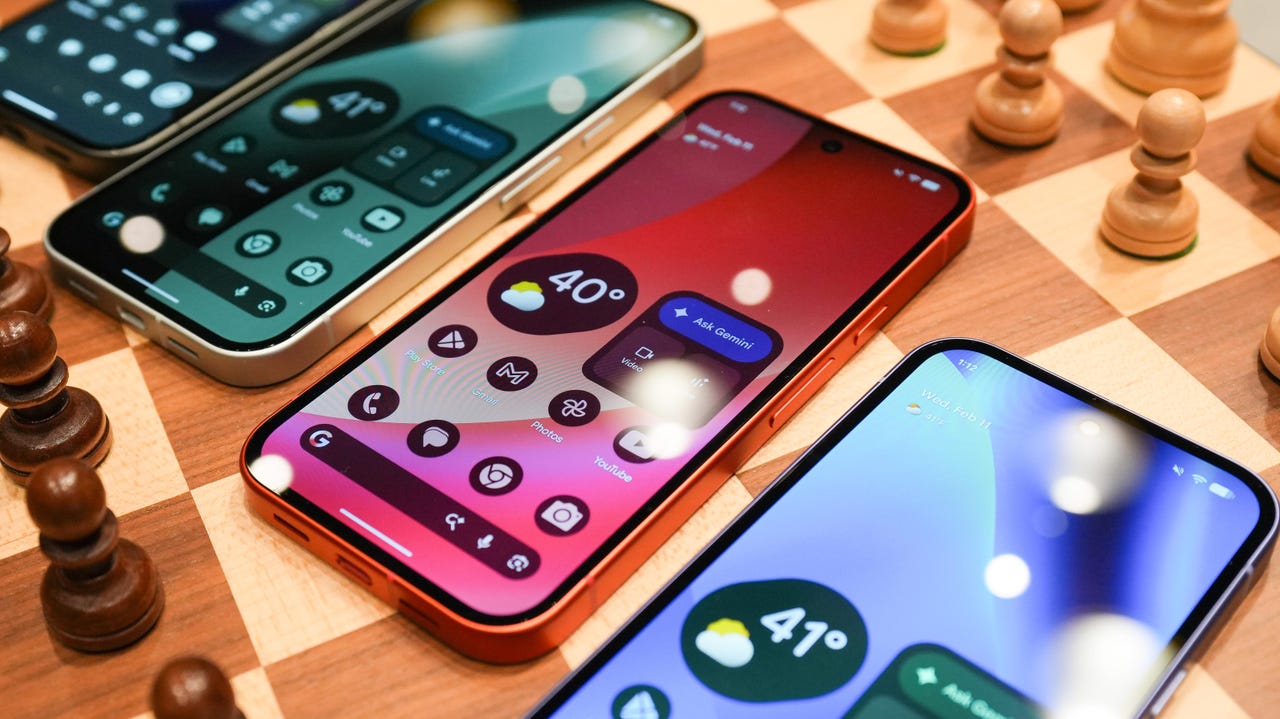
Android 17 is officially here, and it’s a doubly good day for Pixel users, as it’s bringing the June Pixel Drop with it.

Google has rolled out its annual OS update and its latest collection of Pixel-exclusive features at the same time, and the updates pack not only some practical features that will make an impact on how you use your phone daily, but also security protections, some new translation tricks, and more. Pixel Watches — the 2 and later — are included, too, with a potentially life-saving feature addition.

Also: I’m a devoted iPhone user but Android 17 is tempting me with its new video and social features

Here’s a look at what’s new in Android 17, which starts rolling out today to Pixel phones first and then to other devices “throughout 2026,” along with what’s new in the June 2026 Pixel Drop.

What’s new in Android 17?

Since many manufacturers now offer longer update windows, usually 4 to 7 years, a wide range of devices are eligible. The updated OS starts rolling out today to Pixel 6 phones and newer. Samsung’s Galaxy S23 series and newer will get it as One UI 9, along with the Flip 5 and newer, Galaxy A24 and newer, and Tab S9 series. OnePlus will bring Android 17 to the OnePlus 11 and newer.

1. App Bubbles

Perhaps the most useful feature is Bubbles, which lets you turn any app into a floating bubble on your main screen. All you have to do is long-press an app, and it becomes an easy-to-access bubble. If you consistently switch back and forth between apps or need to access a certain app often, like a map or airline app while you’re on a trip, you can now find what you need more quickly.

Pixel Folds are getting a special Bubble Bar at the bottom of the screen that lets you organize, move, and access your recent bubbles from one dedicated space.

2. Additional security

Android 17 is also bringing boosted security. 

To start, you can now grant an app temporary access to your exact location and share only specific contacts. 

Additionally, an enhanced “Mark as lost” feature, located in Find Hub, lets you lock a missing phone with your biometrics, so even if a thief has your passcode, they can’t access anything on your device or turn off tracking. 

Improvements to Live Threat Detection block more suspicious apps and scams, Google explained, and enhanced Advanced Protection mode helps keep you safe from sophisticated threats. Lastly, Google is reducing the number of times someone can attempt to guess your PIN and adding longer wait times between failed attempts.

Also: How to clear your Android phone cache – the 30-second routine every user should be doing

3. Screen reactions and more

Also new is Screen Reactions, which lets you take a selfie video overlaid on a screen recording in lieu of a green screen; a 50/50 gaming mode with a dynamic pad for foldables; and built-in parental controls beyond Pixel devices, so you can set screen time limits and content filtering with a PIN, even if you don’t link your Google Account.

What’s in the June Pixel Drop?

Beyond Android 17, Pixel users are getting several Pixel-specific upgrades in the June Pixel Drop.

1. Custom greetings for Take a Message

Introduced in 2025, Take a Message expands on the Pixel call screening feature and gives you a real-time transcript of what the caller is saying, along with AI-generated follow-up steps. Now, Take a Message has custom greetings, letting you record a personalized outgoing message instead of the default voice.

2. New AI models

Two new AI models are making their way to Android phones. The first is Gemini Omni, a new way to create and edit videos. Gemini Omni lets you type in a prompt and get a custom, high-quality video. This is available on all devices with the Gemini app for Gemini Pro users only.

Also: Everything we saw at Google I/O: Gemini 3.5, Android XR glasses, Spark, and more

Also on the way is Lyria 3, which lets you create original tracks using text prompts or images as inspiration. You can prompt Gemini with the style, vocals, and tempo you want. This is coming to all Android 17 Pixel phones and Folds.

3. Voice Translate for the Pixel 10a

One of the Pixel 10 series’ exclusive features is Voice Translate, which provides a real-time translation on phone calls in the speaker’s voice. ZDNET’s Sabrina Ortiz tried the feature last fall, noting how quickly the feature worked and how well it copied her voice. Voice Translate is getting a small expansion, coming to the Pixel 10a.

Also: iOS 27 envy? 4 features you can already use on an Android phone (including Samsung models)

4. Android Quick Share expansion and more

Pixel users are also getting an expansion of Android Quick Share compatibility with AirDrop, coming to the Pixel 9a and Pixel 8a, and an expansion of Magic Cue to more apps, coming to the Pixel 10 series.

What’s new for Pixel Watches?

Pixel Watches are only getting one new feature, but it’s a potentially big one. Core detection features, including Car Crash Detection, Fall Detection, and Loss of Pulse Detection, are getting emergency sharing. If a severe event is detected, Google explains, your Pixel will call emergency services and notify your chosen contacts. You can toggle emergency contacts on or off for each type of event.

Also: This silent Android feature scans your photos for ‘sensitive content’ – how to uninstall it

Fall Detection is coming to the Pixel Watch, plus the 2, 3, and 4, while Car Crash Detection is coming to the Pixel Watch 2, 3, and 4. Loss of Pulse Detection is only coming to the last two generations, the Pixel Watch 3 and 4.


Source link