What Is The 115% Rule For Air Conditioners?


Your air conditioner is one of those things you hope you never have to replace, but when that time  inevitably comes, choosing the right size air conditioner isn’t going to be as simple as matching a unit to your home’s square footage. Modern residential HVAC design relies on a certain calculation that determines just how much cooling your house actually needs under peak conditions. It’s called the “115% rule,” and it helps you know just how closely an air conditioner’s capacity should match your home’s calculated cooling demand.

First thing’s first: Your home’s cooling load has to be determined through ACCA Manual J. That is, the standardized residential load calculation method referenced by the International Residential Code and the International Energy Conservation Code. Manual J measures how much heat an air conditioning system has to remove from a home during the hottest expected weather. It also accounts for factors like climate, insulation, windows, air leakage, duct characteristics, occupancy, and indoor humidity. The resulting cooling load (measured in British Thermal Units per hour, or BTU/h) is then used as the basis for selecting equipment through ACCA Manual S.

Here’s where the 115% rule comes in: Manual S says an air conditioner’s rated capacity can’t be more than 115% of the calculated sensible cooling load. That way, equipment can be appropriately matched to the home instead of using excess tons of cooling capacity as a safety cushion.

Why the 115% rule exists for air conditioners
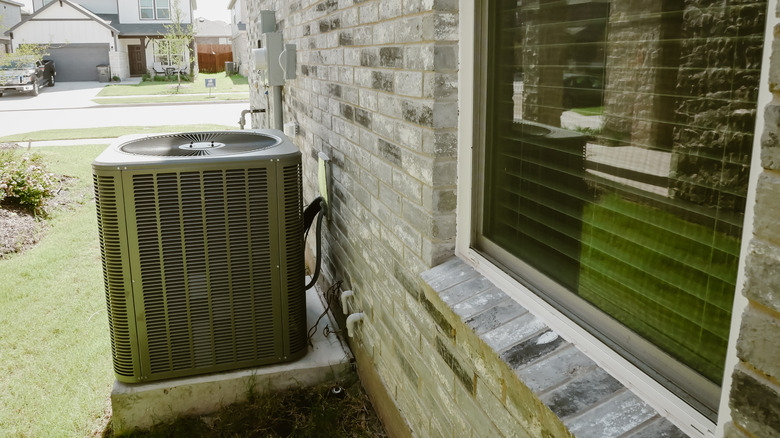
The 115% rule is there to help you balance cooling with efficiency. Manual J is basically calculating worst-case outdoor conditions, but Manual S is more like a reality check: How often is your house really going to be in those worst-case conditions and need the maximum amount of cooling? The conditions determined through Manual J will be relatively rare throughout the year. Most of the time, your AC is going be running under much lighter demands. Hence the 115% rule.

Then there’s the problem of short-cycling. Using oversized equipment can cool your house faster, no doubt about it, but rapid cooling can make your system shut off before it’s run long enough to remove a meaningful amount of moisture from the indoor air. That can leave your home feeling humid, even when the actual temperature is perfectly comfortable. In especially humid climates, that’s a problem. If indoor humidity goes above 60%, you run the risk of mold and other moisture-related problems. Short-cycling also puts more mechanical wear on the system, which inevitably shortens the lifespan of your AC unit.


Source link

Leave a Reply

Subscribe to Our Newsletter

Get our latest articles delivered straight to your inbox. No spam, we promise.

Recent Reviews


Misinformation about sunscreen makes up a small portion of TikTok videos about the subject, but those posts are disproportionately popular and widely shared, a new study finds.

Wellness topics are commonly affected by misinformation spread online. That includes content related to sunscreen — a crucial tool in preventing skin cancer. A new peer-reviewed study conducted by researchers at the University of Alberta found that misinformation on TikTok receives higher audience engagement compared to pro-sunscreen content. 

The study looked at 971 of the most-viewed TikTok videos about sunscreen and found that the most-viewed videos had anti-sunscreen messaging. These videos only made up a small fraction of content found on TikTok (6%), compared to pro-sunscreen videos (86.8%). And only 1.5% of the posts the researchers reviewed claimed sunscreen caused harm.

Although there are fewer anti-sunscreen videos, these attract the most attention because the messaging is more provocative, the researchers said. Public health officials have been concerned about the anti-sunscreen movement that claims, falsely, that sunscreen is harmful or prevents the health benefits of sun exposure. Among the myths these messages spread include that sunscreen causes cancer, it blocks the absorption of Vitamin D and that it’s toxic to humans. The popularity of this content on TikTok could influence viewers, particularly younger ones, to avoid it altogether. 

It’s not surprising that many Americans turn to social media for health advice. A Pew Research Center survey released in April found 36% of Americans reported getting health information at least sometimes from social media. (And 22% said they got health information from AI chatbots.) Wellness influencers know how to make particularly engaging content, which makes it easier for others to believe the message they’re sharing — even if it’s false or misleading. 

Experts attribute the willingness of Americans to believe sunscreen misinformation to a wide range of factors.

“I think sunscreen skepticism grew out of a few overlapping movements: clean beauty, distrust of institutions, fear of synthetic ingredients and a general wellness culture that tends to frame ‘natural’ as automatically safer,” Dr. Melanie Palm, a board-certified dermatologist and cosmetic surgeon at Art of Skin MD, tells CNET. Sensationalized messages spread easily on social media because they feed on real human fears. 

Although there’s relatively more pro-sunscreen TikTok content, experts believe the messaging for this has been short-sighted as well. The study found that the majority of sunscreen content promoted on TikTok was mainly centered around its beauty benefits, versus only 6% mentioning cancer risk reduction.

“For many people, especially younger people, photoaging feels more relevant than cancer prevention,” Palm says. Not that sun protection lacks beauty benefits. ”I don’t think it’s wrong to talk about the beauty benefits of sunscreen because sunscreen does help prevent brown spots, uneven tone, collagen breakdown, and premature aging,” Palm says. 

Since sunscreen content has leaned more towards the beauty angle, its skin cancer prevention messaging has been downplayed. “Dermatologists and brands need to say it [sunscreen can prevent skin cancer] more clearly, and we need to say it in plain language,” Palm says. The problem is that often the facts on social media sound like a lecture. Palm believes experts can work on explaining themselves better without diluting the science and being less dismissive if a patient is worried about sunscreen use.

“We can say, ‘I understand why that sounds concerning — here is what the evidence actually shows, and here are options if you prefer mineral sunscreen, tinted sunscreen, fragrance-free formulas or newer filters,’” Palm suggests. 

Palm recommends experts active on social media focus on shorter videos, simpler analogies and real-life examples of sun damage. That’s just one piece of the equation. Sunscreen manufacturers marketing their products on social media often use fear-based language. Palm recommends that they focus on educating the public instead. This includes explaining common terms such as “broad-spectrum” or why it’s important to reapply sunscreen. “Show sunscreens on different skin tones, because if a product leaves a white cast or pills under makeup, people are not going to wear it daily,” Palm says. 

With research showing that more people are receiving their news from social media, it’s prime time for experts to appear as relatable as possible when sharing content on social platforms. Sunscreen brands can aim to educate younger people on the importance of skin protection and still speak about its beauty benefits. Even if you’re sharing the truth on social media, the way you get that message across is just as important if you want to reach a greater audience. 


Source link