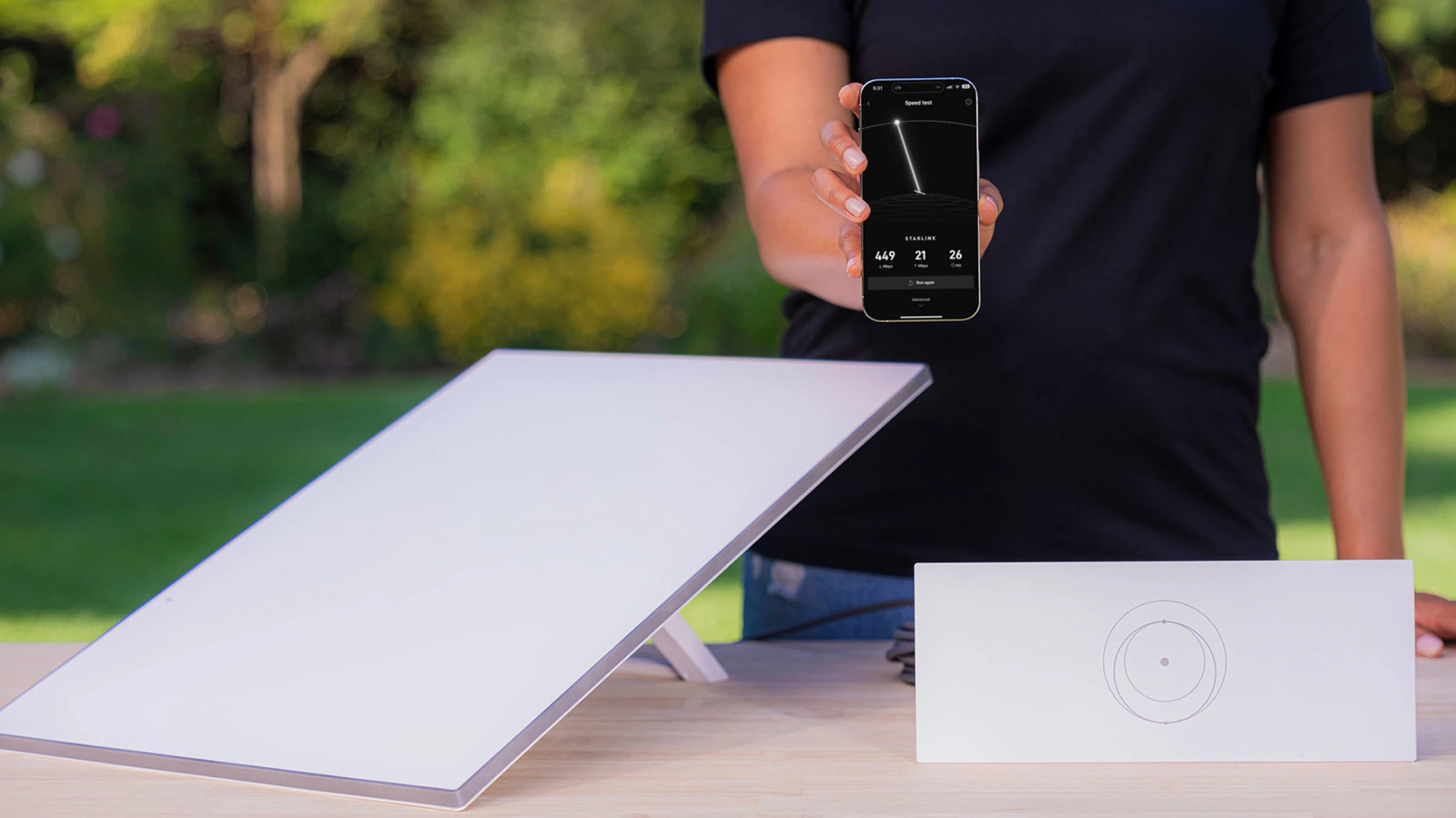

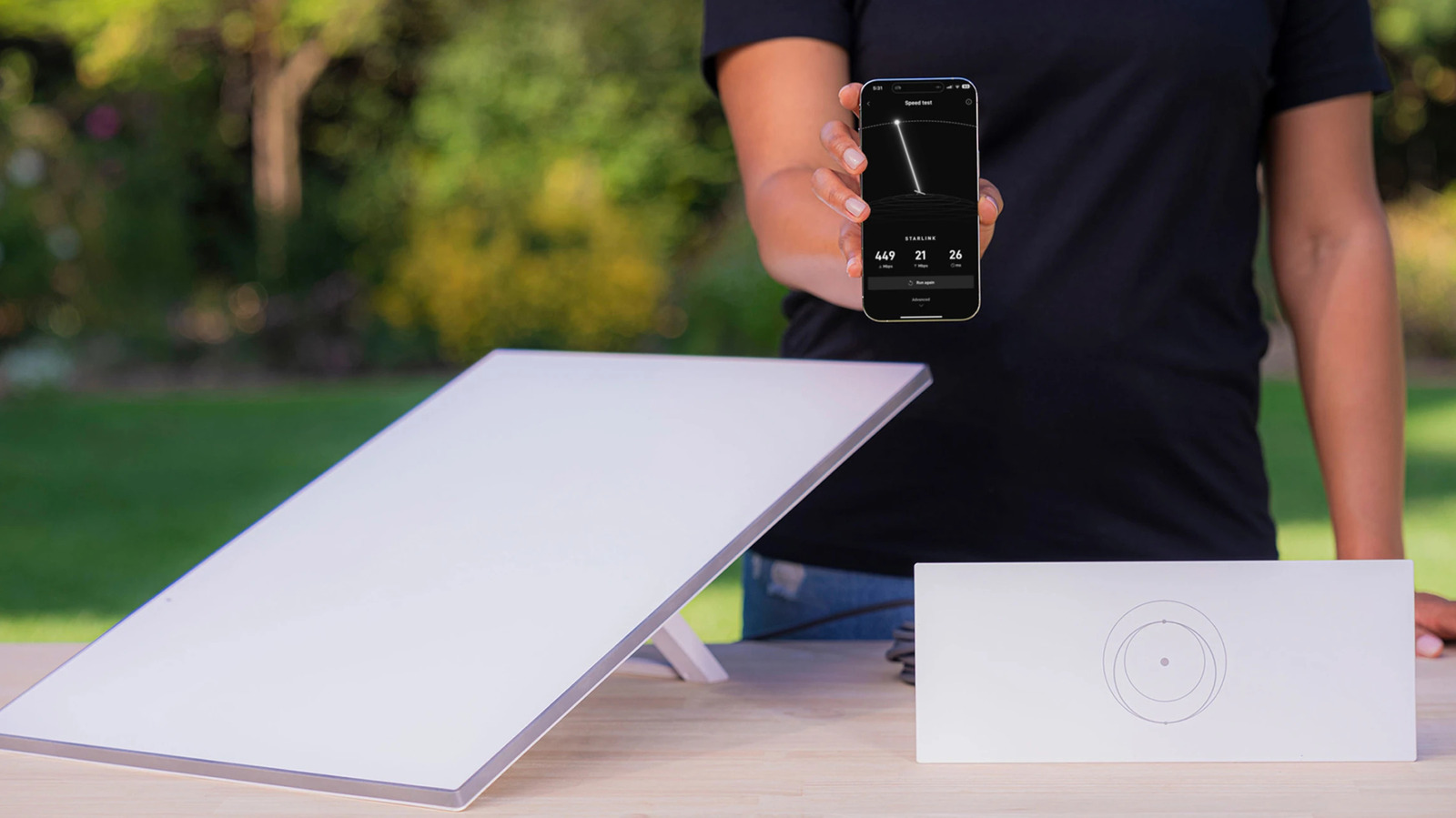
For its home internet service that most people use, Starlink advertises download speeds of up to 400+ Mbps. However, that’s the advertised maximum, and you’ll probably end up with actual speeds lower than that. Starlink’s own specifications document notes that most users “typically experience” download speeds between 45 and 280 Mbps, though a “majority” of them do see above 100 Mbps. That might not sound remarkable, but it’s usually enough for streaming, video calls, and gaming. Meanwhile, uploads are slower too, usually landing between 10 and 30 Mbps.
The fastest speeds are also only possible on the top-tier Residential Max plan, which costs $130 a month. It promises 400+ Mbps, but during testing, PCMag found that the plan averaged between 145 and 170 Mbps. That may be a far cry from the target, but it’s clearly above the average experience, and can safely be called a good speed for Starlink.
Considering Starlink runs on satellites, each satellite up there is shared among many users in an area, so speeds dip as the network gets busier. To help people get a better idea of the kind of speeds to expect, Starlink also publishes a live speed map. As of writing, the fastest home spot on it sits off the northeast coast of Nova Scotia, where the speed reads 378 Mbps. So some people are nearly experiencing the 400 Mbps they’re paying for — just not everyone, since there are many other factors at play. By comparison, peak 5G speeds clearly win out over Starlink.
The fastest Starlink is on planes
Now, Starlink can go quicker, but not in anyone’s living room. The company offers aviation plans, sold through authorized dealers to private jets and larger aircraft. The fastest unlimited regional plan apparently fetches 500 Mbps of speed. However, that can be doubled with the absolute top plan — the Aviation Global Unlimited — which promises up to 1 Gbps when you pair it with the Performance antenna, a sort of a dedicated Starlink performance kit, except designed for aircraft.
Notably, Starlink has been trying to get the quickest speeds for home, too. In July 2026, Elon Musk posted on X, formerly Twitter, that Starlink can now hold a steady 10 Gbps for both download and upload, almost anywhere on the planet. To be clear, this doesn’t mean home subscribers will automatically be upgraded to gigabit speeds. It means the 10 Gbps is run through dedicated ground-station hardware built to feed whole communities. This perhaps could translate to faster speeds during peak congestion, but again, within the bounds of the 400 Mbps limit. And if you link several of the gateways that deliver 10 Gbps together, the most remote sites can even touch 20 Gbps.
Will Starlink ever be 1 Gbps for home users?
As for individual households, gigabit speeds aren’t here just yet, though Starlink keeps saying it’s coming. Current Starlink customers are fed through Gen1 and Gen2 satellites, and there are nearly 11,000 of those in orbit at time of writing. But Starlink has asked the U.S. Federal Communications Commission to approve up to 100,000 new Gen3 satellites.
If those actually go into orbit, Starlink says customers would be able to experience multi-gigabit speeds for both download and upload. It also expects latency under 20 ms, which is close to what wired fiber feels like. A second catch shows up on the customer side. To actually benefit from those speeds, should the satellites launch, customers would need to swap their current dish and antenna out for gear that supports Gen3. At the same time, the monthly bill is expected to go up too. So the honest answer in the end is that gigabit speeds are certainly something Starlink aims for, but it’s nothing you can order today.

Stephan is the sports journalist for the Maple Grove Report.