What’s The Difference Between Harley-Davidson Evolution & Revolution Big Twin Engines?


Think of a Harley-Davidson powerplant, and chances are that some iteration of the company’s big V-twin engines will come to mind. Indeed, given Harley’s long association with the format, it’s difficult to conceive of anything else. The marque’s first 45-degree V-Twin debuted a mere six years after the company was founded, and the rest, as they say, is history. 

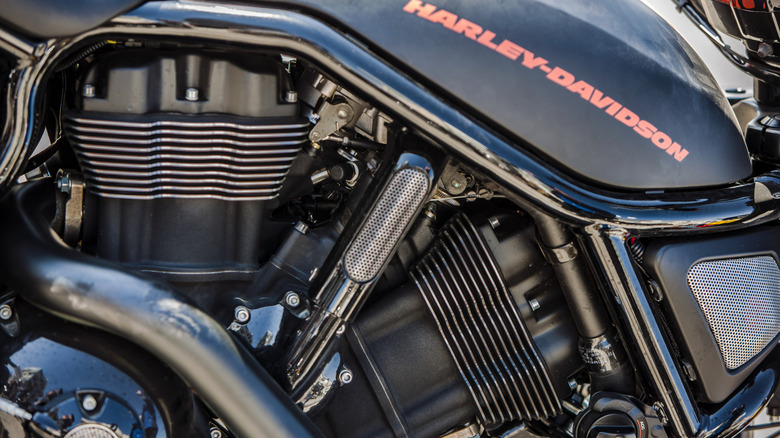
Two significant engines in Harley’s V-Twin lineage are the Evolution Big Twin, introduced in the mid-1980s, and the liquid-cooled Revolution engine that powered Harley’s VRSCA bikes from 2001 to 2017. The names are actually good indicators of the philosophies defining each engine. The Evolution Big Twin was an updated version of its predecessors, with improved head gasket reliability and enhanced cooling, among other enhancements.

The Revolution, on the other hand, lived up to its name by being a radical departure from H-D tradition. With help from German car manufacturer Porsche, the Revolution was a liquid-cooled, 60-degree V engine that featured a dual overhead cam and four valves per cylinder. Early versions of the Revolution displaced 1130 cc and produced 114 hp, later climbing to 1250 cc and a healthy 123 hp. Let’s take a closer look at these legendary Big Twins.

The Evolution Big Twin (1984 – 1999)

The Evolution engine arrived at a time when Harley needed a replacement for its troubled Shovelhead engine — some versions of which are often regarded as the worst engines Harley-Davidson ever used. In terms of engine architecture, the Evolution retained the Shovelhead’s 45-degree layout with twin overhead push-rod-operated valves. While the basics were familiar, Harley introduced several significant changes to improve reliability, cooling, fuel efficiency, and emissions. 

One of the biggest changes was the introduction of aluminum cylinders and heads. These could run at tighter tolerances than previous generations and could also shed heat more efficiently. Redesigned combustion chambers and faster combustion also helped to improve the engine’s cooling. Shortened exhaust ports helped even more, reducing heat transfer into the heads.

Engine knock was also a frequent bugbear for Shovelhead owners. Low-quality fuel, common during the ’70s oil crisis, could cause severe knocking. This could lead to serious engine damage, including damage to the head gasket. To address this, the Evolution used longer head studs for better reliability. The Evolution replaced an ailing engine and is often regarded as the engine that saved Harley-Davidson.

What the Revolution Big Twin brought to the table
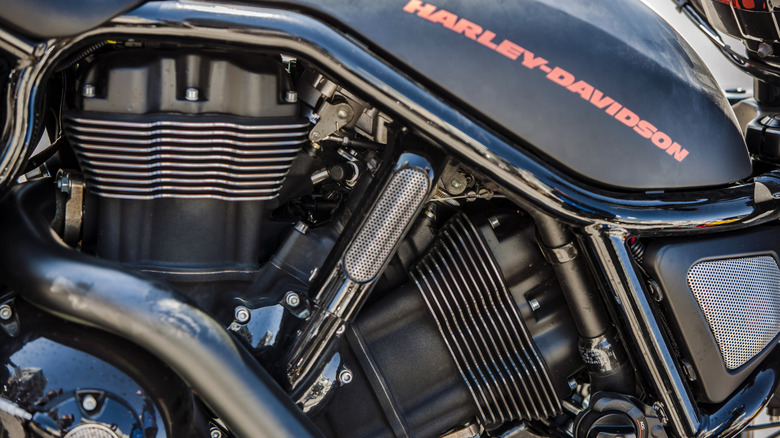
The Evolution was a refinement of Harley’s long-established formula, but the Revolution was the opposite. With it, Harley threw its out the window and moved its engines into modern, high-performance territory. Introduced in 2002, the Revolution was the engine that powered Harley-Davidson’s V-Rod Muscle family of motorcycles.

While it’d be going too far to say that it took Harley out of its comfort zone, it certainly was a radical departure from previous designs. Rather than Harley’s traditional 45-degree layout used in the Evolution and its predecessors, the Revolution used a 60-degree layout with dual overhead camshafts and four-valve heads. It also dropped Harley’s traditional air-cooled design, as used in the Evolution, for liquid cooling. The Revolution also featured electronic fuel injection, although it wasn’t the first Harley engine to do so. EFI had come to the Evolution in 1995, marking the first time Harley had electric fuel injection.  

The Evolution came along when H-D was struggling with aging hardware and a dwindling market share, and helped Harley turn things around. The Revolution was the next step, pushing the company away from its old low-revs-and-high-torque approach toward high-performance designs backed by modern engineering. They’re both significant, just in different ways, and it’s no surprise that they are considered some of the best Harley-Davidson engines ever made


Source link

Leave a Reply

Subscribe to Our Newsletter

Get our latest articles delivered straight to your inbox. No spam, we promise.

Recent Reviews


How to get Siri AI - join the waitlist today

Apple / Elyse Betters Picaro / ZDNET

Follow ZDNET: Add us as a preferred source on Google.


ZDNET’s key takeaways

  • Siri AI requires the iOS 27 developer beta and a waitlist.
  • A free Apple Developer account is enough to install the beta.
  • Apple says Siri AI will launch in beta later this year.

Apple finally gave Siri the major update everyone has wanted for years, moving it from the voice assistant era to the intelligent AI era.

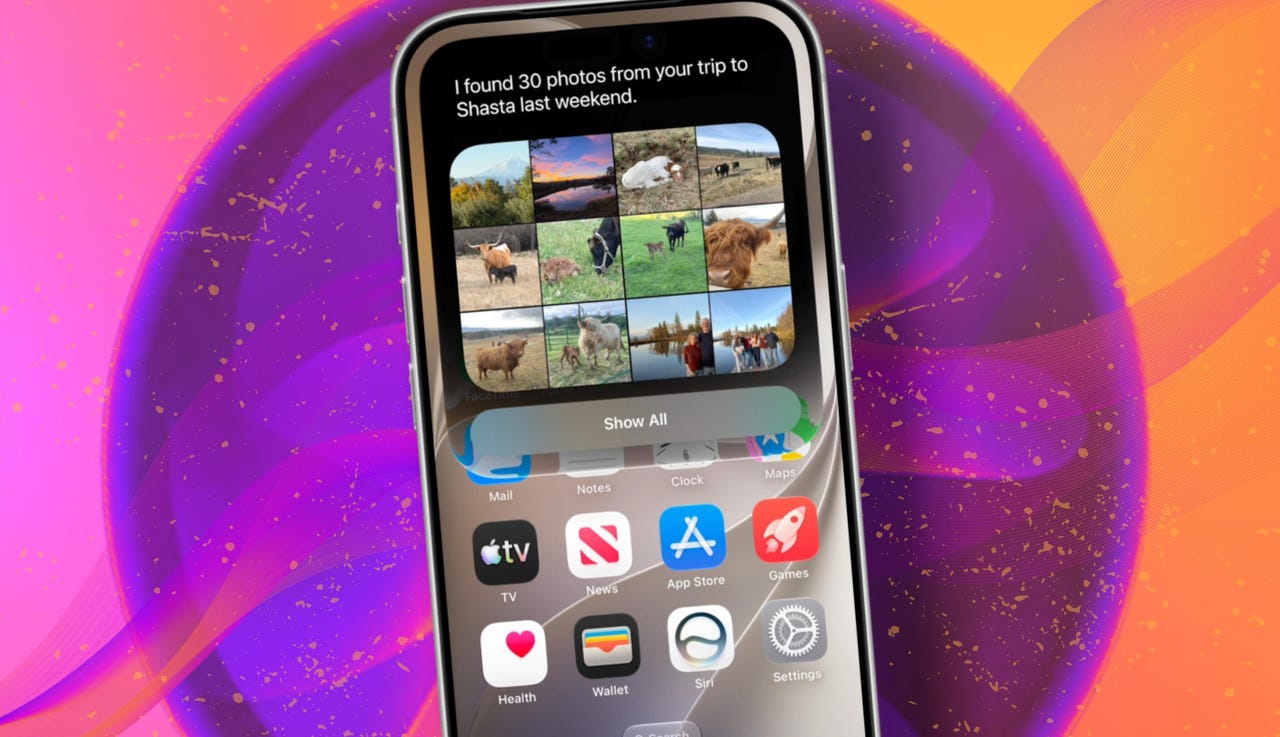
At WWDC 2026 in June, the company introduced Siri AI, a new version of Siri “powered by Apple Intelligence.” Apple said Siri AI is more conversational, understands personal context, can answer broader questions, and can take action across apps. It can also use my information from messages, emails, photos, notes, and the screen itself to get more done on my behalf.

Also: The two biggest iOS 27 features at WWDC for me had nothing to do with Siri AI

The catch? (There’s always one, right?) The iOS 27 developer beta needs to be installed first, and even then, there is a waitlist.

How to get Siri AI

What you’ll need: An iPhone 15 Pro or Pro Max, any iPhone 16 model, or any iPhone 17 model running the iOS 27 developer beta.

Install the iOS 27 developer beta on a secondary device, but be sure to back it up first. Remember, developer betas are unfinished software. Apps can crash or glitch, battery life can drain, and features can disappear.

The good news is Apple no longer requires a $99-a-year Apple Developer Program membership just to get access to beta software. A free Apple Developer account is enough. To join, if you haven’t before, simply go to Apple’s Developer website or use the Apple Developer app, sign in, and agree to the developer terms.

Also: 3 new MacOS 27 features make it worth upgrading right away for me – Siri included

Once that’s done, any new developer beta will automatically appear for the iPhone associated with that Apple Account. To check for iOS 27 and install it now, open Settings > General > Software Update > Beta Updates. From there, select iOS 27 Developer Beta, go back to the Software Update screen, and install the update.

Need help? Check out ZDNET’s guide on installing the iOS 27 developer beta.


Show more

Install the iOS 27 developer beta

Elyse Betters Picaro / ZDNET

After the iOS 27 developer beta is installed, the iPhone will reboot, but Siri AI will not automatically be available to try. Apple is using a waitlist. To join it, open the Settings app, go to Apple Intelligence and Siri, and select “Try New Siri.” Follow the prompts to opt in. Once a spot opens, a notification will appear saying New Siri is available.

Also: Getting real about WWDC and Siri AI – Video

Apple has not confirmed how long the wait will take, but it has said Siri AI will be available in beta “later this year.”


Show more

Join the Siri AI waitlist

Elyse Betters Picaro / ZDNET

Should you wait to try Siri AI?

Maybe. The iOS 27 developer beta is the only route to Siri AI right now. But it’s meant for developers testing apps and APIs, not for most people who need a stable daily phone. Only install it on an iPhone that’s not used every day, or wait for the iOS 27 public beta. That’s expected in July and is easy for anyone to try. An official release for the general public isn’t expected until this fall.

Also: How Data Can Improve Your Health and Wellness

As for me? I joined. I have a spare iPhone running the iOS 27 developer beta right now, and the first thing I did was get on the waitlist to try Siri AI. But that’s because I’m usually excited to try AI tools, and I want to play with the new Siri and be able to write about it. 

Should you join Siri Ai waitlist?

Elyse Betters Picaro / ZDNET

What can Siri AI do?

Apple said the new Siri AI is “a dramatically more capable and conversational assistant” that can help you “find information and get things done throughout the day.” That’s nice, but what, specifically, can it do? According to Apple, the new Siri AI can:

Also: Will your iPhone support Siri AI? The answer is complicated

  • Access “broad world knowledge for up-to-date answers” on any topic.
  • Provide “detailed responses” and “natural back-and-forth conversation.”
  • Use “personal context” in messages, emails, and photos to help find what you need.
  • Find details like restaurant tips, hotel confirmations, and trip photos.
  • Understand what’s on screen and answer questions about it.
  • Use “Visual Intelligence” in Camera and screenshots.
  • Take actions across apps, including drafting emails and editing or sharing photos.
  • Let you ask about images, files, and text from context menus.
  • Generate, rewrite, and proofread text systemwide.
  • Match punctuation and tone in Mail and Messages based on how you usually write.
  • Save “conversation history” in a dedicated Siri app.
  • Offer more expressive voices and better dictation.
  • Help split bills with Apple Cash.
  • Run across iPhone, iPad, Mac, Apple Watch, CarPlay, AirPods, and Vision Pro.
  • Work from Spotlight on iPad and Mac.

When will Siri AI be available?

Apple said it will be available in beta “later this year,” starting in English.

Which iPhone models support Siri AI?

The answer is complicated, but here’s my best guess:

  • iPhone 15 Pro and iPhone 15 Pro Max
  • All iPhone 16 models
  • Any later iPhone models

Apple hasn’t provided a supported device list, but its iOS 27 page shows Siri AI requires “an Apple Intelligence-enabled device.” Apple’s support page for Apple Intelligence also lists “iPhone 15 Pro models, and iPhone 16 models or later.” Apple’s iOS page uses similar wording for Apple Intelligence in iOS 27, as well: “all iPhone 16 models and later, iPhone 15 Pro, iPhone 15 Pro Max.”

There are also regional limits. Apple said Siri AI will “not initially” be available in the EU on iPhone and iPad.


Show more


Source link